Myanmar, a land of golden pagodas, ancient temples, and untouched natural beauty, continues to captivate adventurous travelers despite its complex political landscape. In 2025, this Southeast Asian gem offers a unique opportunity to experience authentic culture and breathtaking landscapes that remain refreshingly untouched by mass tourism. While neighboring countries have seen their most iconic destinations transformed by overtourism, Myanmar still provides genuine cultural immersion and the chance to explore magnificent sites without the crowds.
This comprehensive Myanmar travel guide 2025 will navigate you through everything you need to know—from the spectacular temples of Bagan to the floating villages of Inle Lake, from practical visa advice to current safety considerations. Whether you’re drawn by the allure of golden pagodas gleaming in the sunset or the warm smiles of locals proudly sharing their traditions, Myanmar rewards those who venture beyond the familiar paths of Southeast Asian travel.
The magical sunrise over Bagan’s ancient temples remains one of Myanmar’s most iconic experiences
Why Visit Myanmar in 2025
As many Southeast Asian destinations struggle with overtourism, Myanmar offers a refreshing alternative where authentic experiences still await. The country’s relatively recent opening to international tourism means many of its cultural and natural treasures remain pristine and uncrowded compared to neighboring Thailand or Vietnam.

Traditional thanaka face paint remains a common sight throughout Myanmar
UNESCO Heritage and Living History
Myanmar boasts extraordinary cultural heritage, including the archaeological zone of Bagan with over 2,000 ancient temples and pagodas spread across a vast plain. In 2025, visitors can still climb selected pagodas for sunrise and sunset views, an experience increasingly restricted at similar sites worldwide. The ancient cities around Mandalay and the colonial architecture of Yangon provide windows into different periods of Myanmar’s rich history.
Authentic Cultural Experiences
Unlike more developed tourist destinations, Myanmar offers genuine cultural immersion. From participating in alms-giving to monks at dawn to joining locals at tea houses for conversation over sweet milk tea, visitors can engage with traditions that remain an integral part of daily life rather than performances staged for tourists.

Morning alms-giving to monks remains an important daily ritual throughout Myanmar
Unspoiled Natural Landscapes
From the serene waters of Inle Lake to the pristine beaches of the Mergui Archipelago, Myanmar’s diverse landscapes offer adventures for every type of traveler. Trekking opportunities in Shan State connect visitors with ethnic minority villages where traditional lifestyles continue largely unchanged by modern influences.
Plan Your Myanmar Adventure
Ready to experience Myanmar’s authentic culture and breathtaking landscapes? Our expert travel consultants can help you create the perfect itinerary tailored to your interests.
Top Destinations in Myanmar for 2025
Myanmar offers diverse experiences across its varied landscapes. From bustling cities to tranquil countryside, here are the must-visit destinations for travelers in 2025.
Yangon: The Cultural Gateway
Most international visitors begin their Myanmar journey in Yangon, the former capital and largest city. The magnificent Shwedagon Pagoda dominates the skyline with its 99-meter gold-plated stupa. In 2025, the area around the pagoda continues to be the spiritual heart of Myanmar, especially magical at sunset when locals come to pray and the golden surface reflects the changing light.

The magnificent Shwedagon Pagoda glows at sunset, creating an unforgettable spectacle
Beyond Shwedagon, Yangon rewards explorers with colonial architecture in the downtown area, vibrant markets like Bogyoke Aung San (Scott Market), and the bustling Chinatown district along 19th Street where food stalls serve delicious street food as evening falls.
Bagan: Ancient Temple Plains
The archaeological zone of Bagan remains Myanmar’s most iconic destination. Over 2,000 temples and pagodas dot the vast plain, creating a mystical landscape best viewed at sunrise or sunset. In 2025, hot air balloon rides continue to offer the most spectacular perspective, floating silently above the temples in the golden morning light.

Hot air balloons over Bagan provide one of travel’s most magical experiences
While some temples are closed for climbing to protect the structures, local authorities designate specific pagodas where visitors can still ascend for panoramic views. Exploring by e-bike remains the most flexible way to discover hidden temples away from the main sites.
Mandalay: Royal Heritage
Myanmar’s last royal capital, Mandalay offers rich cultural experiences centered around its restored palace complex. The city serves as a base for exploring the ancient capitals of Inwa, Amarapura, and Sagaing, each with distinctive historical sites.

U Bein Bridge near Mandalay is particularly magical at sunset
Don’t miss U Bein Bridge in Amarapura, the world’s longest teakwood bridge, especially beautiful at sunset when monks and locals cross its 1.2-kilometer span. In Mandalay proper, Mandalay Hill offers panoramic views and the chance to interact with monks practicing their English with visitors.
Inle Lake: Floating Villages and Gardens
The serene waters of Inle Lake showcase a unique way of life centered around floating gardens and villages built on stilts. The Intha people are famous for their distinctive leg-rowing technique, where fishermen navigate standing on one leg while wrapping the other around an oar.

Intha fishermen demonstrate their unique leg-rowing technique on Inle Lake
A boat trip on the lake reveals floating gardens where tomatoes and other vegetables grow, workshops producing traditional crafts, and markets that rotate between lakeside villages on a five-day schedule. The Phaung Daw Oo Pagoda houses five sacred Buddha images so covered in gold leaf that their original form is no longer visible.
Ngapali Beach: Pristine Coastline
For relaxation after temple-hopping, Ngapali Beach offers seven kilometers of pristine white sand and clear blue waters along the Bay of Bengal. Unlike the overdeveloped beaches of neighboring countries, Ngapali maintains a laid-back atmosphere with a limited number of resorts spaced along the coastline.

Ngapali Beach offers pristine coastline without the crowds found at many Southeast Asian beaches
Fresh seafood restaurants line the beach, serving the day’s catch as the sun sets over the water. In 2025, Ngapali remains accessible via direct flights from Yangon, making it an easy addition to any Myanmar itinerary.
Hsipaw: Trekking and Rural Life
For travelers seeking off-the-beaten-path experiences, the northern Shan State town of Hsipaw offers excellent trekking opportunities through terraced hills to ethnic minority villages. The journey to Hsipaw itself is memorable, particularly the train ride from Mandalay that crosses the spectacular Gokteik Viaduct, a colonial-era engineering marvel.

The train journey across Gokteik Viaduct is an adventure in itself
Book Your Myanmar Experience
Ready to explore these amazing destinations? Our curated tours include all the highlights with expert local guides who provide authentic cultural insights.
Cultural Highlights of Myanmar
Myanmar’s rich cultural tapestry offers travelers unique insights into traditions that have remained largely unchanged for centuries. Understanding these cultural elements enhances any visit to this fascinating country.
Buddhism and Daily Life
Buddhism permeates every aspect of life in Myanmar, with an estimated 90% of the population practicing Theravada Buddhism. Monasteries serve not just as religious centers but as community hubs, educational institutions, and social welfare providers. In 2025, visitors can still observe (and respectfully participate in) morning alms-giving, where monks receive their daily food from the community.

Monastery education remains an important tradition in Myanmar
Pagoda Etiquette
When visiting Myanmar’s numerous pagodas and temples, proper etiquette is essential. Always remove shoes and socks before entering temple grounds (not just the buildings themselves). Dress modestly with shoulders and knees covered. Women should never touch or hand items directly to monks. Many sacred sites prohibit photography inside temple buildings, so always check before taking pictures.
Pagoda Visitor Tips
- Remove shoes and socks before entering temple grounds
- Dress modestly with shoulders and knees covered
- Women should not touch or directly hand items to monks
- Walk clockwise around stupas and Buddha images
- Sit with feet pointing away from Buddha images (never point with feet)
- Ask permission before taking photographs inside temples
Thanaka: Traditional Beauty
The yellowish-white paste seen on the faces of many Myanmar people, especially women and children, is thanaka. Made from ground tree bark, it serves as both sunscreen and beauty product. In 2025, despite increasing modernization, thanaka remains widely used throughout the country, particularly in rural areas.

Thanaka face paint serves both practical and aesthetic purposes
Colonial Architecture in Yangon
Yangon possesses one of Asia’s richest collections of colonial-era buildings, legacy of British rule from 1824 to 1948. Though many structures have fallen into disrepair, preservation efforts have accelerated in recent years. The Secretariat Building, Strand Hotel, and buildings along Pansodan Street showcase this architectural heritage.

Yangon’s downtown area contains one of Asia’s largest collections of colonial architecture
Traditional Arts and Crafts
Myanmar’s artisans preserve ancient techniques in lacquerware, wood carving, tapestry, and puppetry. Bagan is renowned for its lacquerware, where artisans apply multiple layers of tree sap to create intricate designs. In Mandalay, workshops continue the tradition of gold leaf beating, producing the thin sheets applied to Buddha images by devotees.

Lacquerware production in Bagan follows techniques passed down through generations
Natural Attractions in Myanmar
Beyond its cultural treasures, Myanmar offers diverse natural landscapes from mountain ranges to pristine coastlines. These natural wonders provide both scenic beauty and opportunities for adventure.
Irrawaddy River Cruises
The mighty Irrawaddy (Ayeyarwady) River flows through the heart of Myanmar, serving as the country’s historical lifeline. River cruises between Mandalay and Bagan offer a leisurely way to observe rural life along the riverbanks while enjoying comfortable accommodations.

River cruises offer a comfortable way to experience life along the Irrawaddy
In 2025, several operators offer cruises ranging from 2-day journeys to week-long expeditions that include stops at villages inaccessible by road. The Belmond Road to Mandalay and Sanctuary Ananda provide luxury options, while more affordable alternatives are available for budget-conscious travelers.
Experience the Irrawaddy
Discover Myanmar from a unique perspective with a luxury river cruise between historic Mandalay and temple-filled Bagan.
Trekking in Shan State
The hills of Shan State offer excellent trekking opportunities with varying difficulty levels. The most popular route runs from Kalaw to Inle Lake, typically covered over 2-3 days with overnight stays in village homes or monasteries.

Trekking through Shan State offers immersion in rural landscapes and village life
These treks provide intimate glimpses into rural life among various ethnic groups including the Pa-O, Danu, and Intha people. Local guides not only navigate the trails but facilitate meaningful cultural exchanges with villagers along the route.
Mergui Archipelago
For travelers seeking truly untouched destinations, the Mergui (Myeik) Archipelago in southern Myanmar offers over 800 islands with pristine beaches, vibrant coral reefs, and dense jungle interiors. Most islands remain uninhabited except for the semi-nomadic Moken “sea gypsies.”

The remote Mergui Archipelago offers some of Southeast Asia’s last untouched islands
In 2025, limited eco-resorts and yacht charters provide access to this remote region. While not budget-friendly, the archipelago offers a rare opportunity to explore marine environments that have escaped the development seen in neighboring Thailand.
Food and Drink in Myanmar
Myanmar cuisine remains one of Southeast Asia’s least known culinary traditions, blending influences from neighboring India, China, and Thailand while maintaining its distinctive character. For travelers in 2025, exploring local food offers delicious insights into the country’s cultural diversity.
Essential Myanmar Dishes

Mohinga – Myanmar’s unofficial national dish
Mohinga
Often considered Myanmar’s national dish, mohinga consists of rice noodles in a rich fish-based broth flavored with lemongrass, banana stem, and ginger. Typically eaten for breakfast but available throughout the day from street vendors and restaurants alike.

Lahpet Thoke – Myanmar’s unique tea leaf salad
Lahpet Thoke (Tea Leaf Salad)
This uniquely Burmese dish features fermented tea leaves mixed with crunchy ingredients like fried beans, peanuts, sesame seeds, and garlic, creating a complex flavor profile that’s simultaneously tangy, bitter, and spicy.

Shan noodles – a popular dish from Shan State
Shan Noodles
Originating from Shan State, this popular dish features thin rice noodles with chicken or pork in a light broth, often served with a side of pickled vegetables. A simpler alternative to mohinga that’s perfect for lunch.

Traditional Burmese curry set with multiple side dishes
Burmese Curries
Unlike the coconut-based curries of Thailand, Burmese curries use a base of onion, ginger, and garlic with generous amounts of oil. What makes the experience special is the array of complimentary side dishes served alongside the main curry.
Street Food Culture
Myanmar’s streets come alive with food vendors, particularly in the evenings. In Yangon, 19th Street in Chinatown transforms into an open-air food court where barbecue stalls grill everything from meat skewers to fresh seafood. Street food offers both the most authentic and economical dining experiences.

19th Street in Yangon comes alive with food stalls each evening
Tea Culture
Tea houses serve as Myanmar’s social hubs where people gather to chat, conduct business, or simply watch the world go by. Sweet milk tea (laphet yay) is the standard order, often accompanied by simple snacks like samosas or steamed buns.

Tea houses function as social centers throughout Myanmar
Local Beverages
Beyond tea, Myanmar offers several local beverages worth trying. Myanmar Beer dominates the market with its refreshing lager that pairs well with local cuisine. In rural areas, palm wine (toddy) provides a traditional alcoholic option, while fresh sugarcane juice offers sweet refreshment in markets nationwide.
Practical Travel Tips for Myanmar in 2025
Successful travel in Myanmar requires some advance planning and awareness of local conditions. These practical tips will help you navigate everything from visa requirements to transportation options.
Visa Requirements
Most nationalities require a visa to enter Myanmar. The e-visa system remains the most convenient option in 2025, allowing online application through the official government website. Tourist e-visas typically cost around $50 USD and permit a stay of 28 days.
Myanmar Visa Information
- Apply online through the official e-visa website: https://evisa.moip.gov.mm/
- Tourist e-visa cost: approximately $50 USD
- Processing time: 3 business days (express service available)
- Validity: 90 days from issue date (for a 28-day stay)
- Entry points: International airports and selected land borders
- Requirements: Passport valid for 6 months, accommodation details, digital photo
Money and Banking
The Myanmar kyat (MMK) is the local currency, though some hotels and high-end establishments accept US dollars. ATMs have become more widespread in tourist areas, but service can be unreliable. Bring new, crisp US dollar bills as backup, as worn or marked notes may be rejected.
Money Tips for Myanmar
Bring pristine US dollar bills (no folds, marks, or tears) as backup. Larger denominations ($50-$100) typically receive better exchange rates. Inform your bank of travel plans to prevent card blocks. Credit cards are accepted only at higher-end establishments with typically a 3-5% surcharge.
Transportation Options
Myanmar’s transportation infrastructure continues to develop, offering various options for getting around the country in 2025.
Domestic Flights
Pros: Fast, convenient for covering long distances
Cons: More expensive, limited schedules
Cost: $70-120 per segment
Recommended for travelers with limited time. Airlines include Myanmar National Airlines, Air KBZ, and Mann Yadanarpon.
Overnight Buses
Pros: Economical, saves on accommodation
Cons: Long journeys, variable comfort
Cost: $15-25 for VIP buses
VIP buses offer reclining seats, blankets, and refreshments. Popular for Yangon-Bagan and Yangon-Mandalay routes.
Train Travel
Pros: Scenic routes, cultural experience
Cons: Slow, often uncomfortable
Cost: $5-40 depending on class
More an experience than efficient transport. The Gokteik Viaduct journey is spectacular despite the bumpy ride.
Accommodation Options
Myanmar offers accommodation for all budgets, though options remain more limited than in neighboring countries. In major tourist destinations, advance booking is recommended, especially during peak season (November-February).
| Category | Price Range (USD) | What to Expect | Best For |
| Budget Guesthouses | $15-30 | Basic rooms, often with shared bathrooms, simple breakfast | Backpackers, solo travelers |
| Mid-range Hotels | $40-80 | Clean rooms with AC, private bathroom, breakfast included | Couples, families on moderate budget |
| Boutique Hotels | $80-150 | Stylish rooms, often in restored buildings, personalized service | Couples seeking character and comfort |
| Luxury Hotels | $150-400+ | International standards, full amenities, premium locations | Luxury travelers, special occasions |
Find Your Perfect Myanmar Accommodation
From boutique hotels in colonial buildings to luxury resorts on pristine beaches, we can help you find the perfect place to stay in Myanmar.
Internet and Communication
Internet access has improved significantly in Myanmar, with WiFi available in most hotels and many cafes in tourist areas. Mobile data coverage has expanded, making local SIM cards a practical option for staying connected. Major providers include MPT, Ooredoo, and Telenor, with tourist SIM packages available at international airports.
Health and Safety
No special vaccinations are required for Myanmar, but standard travel immunizations are recommended. Bottled water is essential, and caution with street food is advised for sensitive stomachs. Basic medical facilities exist in major cities, but comprehensive travel insurance with evacuation coverage is strongly recommended.
Stay Protected in Myanmar
Travel with peace of mind knowing you’re covered for medical emergencies, trip cancellations, and more with comprehensive travel insurance.
Expat Life in Myanmar in 2025
Myanmar hosts a small but diverse expat community, primarily concentrated in Yangon with smaller numbers in Mandalay and tourist centers. While challenging in some respects, expat life offers unique rewards for those seeking immersion in this fascinating culture.
Living Costs
Compared to Western countries, living costs remain moderate though higher than in neighboring countries like Vietnam or Cambodia. Housing represents the largest expense, with significant variation between basic local accommodations and Western-standard apartments.
| Expense Category | Monthly Cost (USD) | Notes |
| Apartment Rental (1BR) | $400-1,200 | Lower range for local standard, higher for Western standard in prime areas |
| Utilities | $100-200 | Including electricity, water, internet. Electricity costs higher due to frequent outages requiring generator backup |
| Food & Dining | $200-600 | Lower range for local food, higher for regular Western meals |
| Transportation | $50-200 | Taxis are primary transport for expats in Yangon |
Digital Nomad Scene
While not yet a digital nomad hotspot like Chiang Mai or Bali, Yangon has developed a small but growing community of remote workers. Coworking spaces have emerged in Yangon, offering reliable internet and networking opportunities. The relatively low cost of living combined with rich cultural experiences attracts those seeking alternatives to more established digital nomad destinations.

Yangon offers an emerging scene for digital nomads seeking new experiences
Social Life and Dating
Expat social circles center around a handful of Western-style venues in Yangon and Mandalay. Regular events organized through Facebook groups and platforms like InterNations provide opportunities to connect. Dating across cultural lines requires sensitivity to Myanmar’s relatively conservative social norms, though attitudes are gradually evolving, particularly in urban centers.
Safety and Political Considerations for Myanmar Travel in 2025
Myanmar’s complex political situation requires travelers to stay informed about current conditions. While tourist areas generally remain safe for visitors, awareness of the broader context helps ensure responsible travel decisions.
Current Political Situation
Following the military takeover in February 2021, Myanmar continues to experience political tensions and periodic civil unrest. In 2025, the situation remains fluid with varying conditions across different regions. Tourist areas including Yangon, Mandalay, Bagan, and Inle Lake generally operate normally with increased security presence.
Stay Informed
Before and during your trip, regularly check travel advisories from your government. Reliable sources include:
Restricted Areas
Several regions remain off-limits to foreign visitors due to ongoing conflicts or government restrictions. These include parts of Rakhine, Chin, Shan, and Kachin states. Always verify the current status of any destination outside the main tourist circuit before planning your visit.
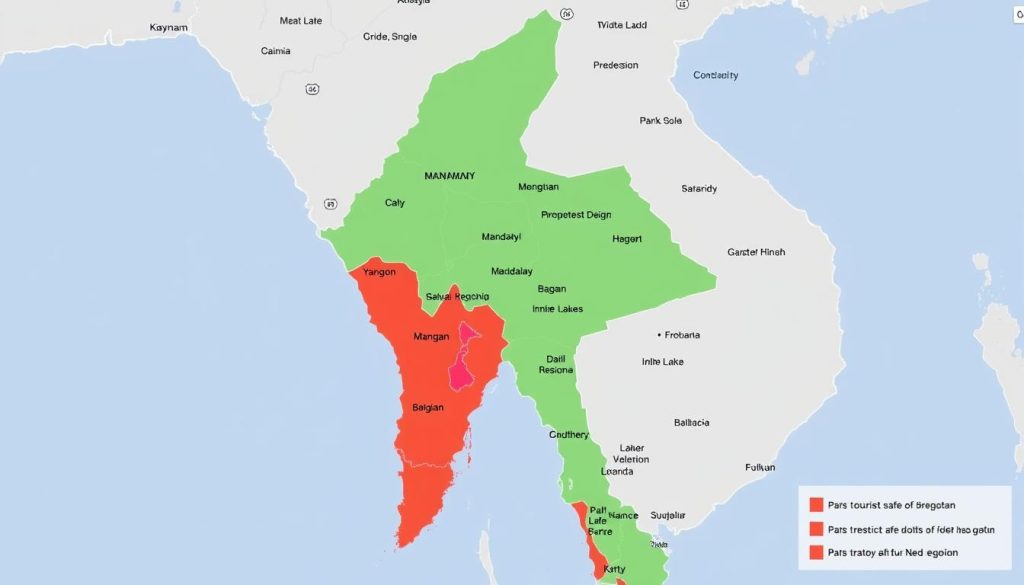
Map showing generally safe tourist areas (green) and regions with travel restrictions (red) in 2025
Safety Precautions
Common-sense precautions serve travelers well in Myanmar. Petty crime remains relatively rare compared to many tourist destinations, but standard vigilance is advised, particularly in crowded areas. The greatest risks typically involve transportation safety and health concerns rather than crime.
Do’s
- Register with your embassy upon arrival
- Carry hotel contact information and address in Burmese script
- Respect local customs regarding dress and behavior
- Keep photocopies of important documents separate from originals
- Stay in registered accommodations as required by law
- Purchase comprehensive travel insurance
Don’ts
- Discuss sensitive political topics in public
- Photograph military personnel or installations
- Visit restricted areas without proper permissions
- Participate in political demonstrations
- Disrespect religious customs or sites
- Travel after dark in remote areas
Cultural Sensitivity
Myanmar’s complex political situation makes cultural sensitivity particularly important. Avoid political discussions that might put locals in uncomfortable positions. Respect religious practices and dress modestly, especially when visiting temples and pagodas. Learning a few basic Burmese phrases demonstrates respect for local culture and typically elicits warm responses.
Stay Safe in Myanmar
Travel with confidence knowing you have 24/7 emergency assistance and comprehensive coverage for medical emergencies, trip cancellations, and more.
Recommended Services for Myanmar Travel
Planning a trip to Myanmar involves several key services that can enhance your experience. These trusted partners offer quality experiences for travelers seeking authentic adventures with peace of mind.

Belmond Road to Mandalay
Experience Myanmar’s riverside life in luxury aboard this elegant cruise ship. Journey between Bagan and Mandalay with expert guides, gourmet dining, and exclusive cultural experiences.
- Luxurious cabins with panoramic river views
- Gourmet cuisine featuring local and international dishes
- Expert-led shore excursions to temples and villages
- Swimming pool and spa treatments onboard

Balloons Over Bagan
The original and most respected hot air balloon operator in Bagan, offering unforgettable sunrise flights over the ancient temple plain since 1999.
- Premium safety record with experienced pilots
- Small baskets (8-16 passengers) for personalized experience
- Includes hotel transfers, pre-flight coffee, and post-flight champagne breakfast
- Flight certificate and memorable photo opportunities

SafetyWing Travel Insurance
Comprehensive travel medical insurance designed for global travelers, digital nomads, and adventurers exploring destinations like Myanmar.
- Coverage for unexpected illness or injury, including COVID-19
- Emergency medical evacuation and repatriation
- Trip interruption and lost luggage benefits
- 24/7 support and assistance worldwide
- Affordable monthly plans starting at $42
Conclusion: Why Myanmar Deserves a Place on Your 2025 Travel List
Myanmar offers a rare opportunity in today’s world—a chance to experience Southeast Asian culture, history, and landscapes that remain authentically preserved and relatively uncrowded. While neighboring countries struggle with overtourism, Myanmar rewards thoughtful travelers with genuine connections and moments of discovery that feel increasingly rare in our interconnected world.
From the golden spires of Shwedagon Pagoda to the misty morning light illuminating thousands of temples across Bagan’s plain, from the unique leg-rowing fishermen of Inle Lake to the colonial charm of downtown Yangon, Myanmar presents a tapestry of experiences that leave lasting impressions on those who visit with open hearts and minds.

The magical glow of Shwedagon Pagoda at sunset epitomizes Myanmar’s timeless beauty
The country’s political complexities cannot be ignored, but responsible tourism creates valuable economic opportunities for local communities while fostering cultural exchange and understanding. By traveling thoughtfully—respecting local customs, supporting local businesses, and approaching differences with curiosity rather than judgment—visitors contribute positively to Myanmar’s ongoing story.
For those seeking travel experiences that transcend the ordinary, that challenge perspectives and create genuine connections, Myanmar in 2025 offers a journey that resonates long after returning home—a journey through a land where ancient traditions endure, natural beauty abounds, and the warmth of human connection bridges all differences.
Begin Your Myanmar Journey
Ready to experience the magic of Myanmar for yourself? Our expert travel consultants can help you create the perfect itinerary tailored to your interests, timeframe, and budget.